
October 15, 2026
Custom Wiring Harness: Materials, Specs and Industrial Use Cases
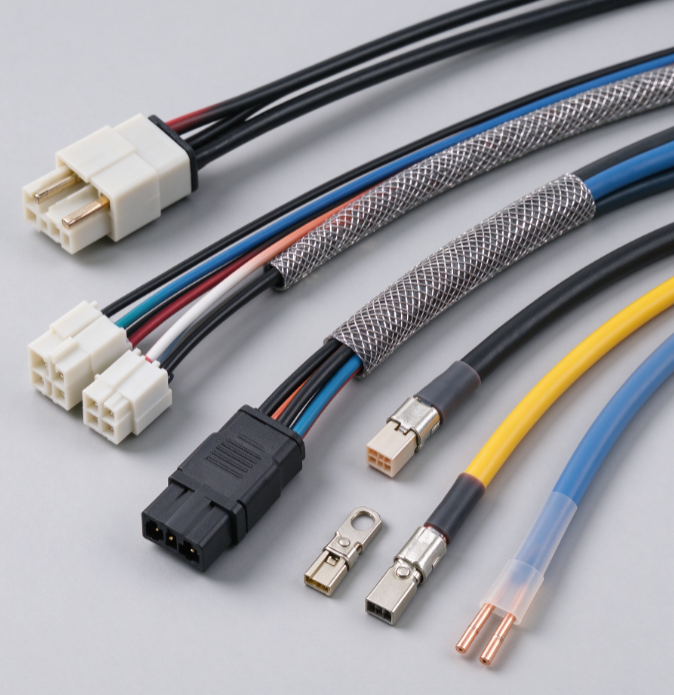
Table of Contents
1. Introduction
2. Core Components of Custom Wiring Harness
3. Insulation Material Performance Comparison
4. Common Custom Wire Harness Types
5. Key Functional Advantages
6. Main Industrial Applications
7. Practical Customization Guidelines
8. Industry FAQ
Introduction
Standard wire assemblies cannot match unique equipment layouts. Fixed-length cables often cause messy wiring and unstable signal transmission.
Custom wiring harness is a tailored cable assembly solution. It combine customized wires, connectors, insulation sleeves and terminals into one integrated unit.
Custom cable harness support exclusive length, color and shielding design. It fit special mechanical and electrical installation environments.
Well-made custom wiring harness improve equipment neatness. It also reduce circuit failure rate in long-term operation.
Core Components of Custom Wiring Harness
Conductor and Insulation Layer
Most custom wiring harness use tinned copper or oxygen-free copper conductors. High copper purity ensure stable electrical conductivity.
Different insulation materials adapt different temperature and voltage environments. Insulation quality decide harness service life directly.
Connector and Termination Parts
Custom connectors include pin headers, terminal blocks and waterproof plugs. All match customized circuit connection needs.
Precision crimping process fix wire and terminals tightly. It avoid loose contact during equipment vibration.
Auxiliary Protective Parts
Cable ties, heat shrink tubes and shielding sleeves serve protective functions. They resist abrasion, interference and corrosion.
Insulation Material Performance Comparison
Insulation material selection is the key for custom wiring harness reliability. The table below show verified industry standard performance data for mainstream harness materials.
Insulation Material | Working Temperature Range | Voltage Resistance | Flexibility | Core Application |
PVC | -20°C to 105°C | 300V | Good | General indoor electronic equipment |
XLPE | -40°C to 125°C | 600V | Moderate | Energy storage and outdoor circuits |
Silicone Rubber | -60°C to 200°C | 600V | Excellent | High-temperature industrial equipment |
PTFE | -200°C to 260°C | 1000V | Good | Aerospace and precision instruments |
PVC insulation is the most cost-effective option. It cover most standard custom wiring harness projects.
Silicone and PTFE materials work better in extreme high and low temperature environments. They support long-term stable operation.
Common Custom Wire Harness Types
Custom power wiring harness focus on current transmission. It suit equipment power supply connection.
Custom signal wiring harness transmit weak electric signals. It adopt shielding structure to avoid external interference.
Waterproof custom wiring harness use sealed connectors and thick insulation. It reach IP68 protection grade for outdoor use.
High-temperature custom cable harness apply industrial heat-resistant materials. It adapt continuous high-heat working conditions.
Key Functional Advantages
Custom wiring harness match equipment installation size exactly. No redundant cable length or installation mismatch.
Integrated assembly structure simplify internal wiring layout. It make equipment maintenance easier.
Custom shielding design reduce electromagnetic interference. It ensure accurate signal and power transmission.
Targeted material selection extend harness service life. It reduce frequent circuit replacement costs.
Main Industrial Applications
Industrial automation equipment use custom wiring harness for internal circuit connection and signal control.
Automotive industry adopt custom cable harness for vehicle electrical systems and sensor wiring.
Medical equipment use high-insulation custom harness. It meet medical safety and stability standards.
New energy and solar equipment rely on heat-resistant custom wiring harness for outdoor power transmission.
Practical Customization Guidelines
Choose PVC insulation for indoor ordinary equipment. It balance cost and basic performance.
Select silicone or XLPE materials for outdoor and high-temperature working scenarios.
Add shielding structure for signal transmission harnesses. Prevent signal distortion and data loss.
Confirm connector model and wiring sequence before mass production. Avoid assembly errors.
Industry FAQ
1. What is a custom wiring harness?
A custom wiring harness is a tailor-made cable assembly. It includes customized wires, connectors, terminals and protective structures to fit specific equipment circuit and installation requirements.
2. What material is best for high-temperature harness?
Silicone rubber and PTFE are the top choices. Silicone support 200°C continuous work, while PTFE can withstand up to 260°C extreme temperature.
3. What protection grade can custom wiring harness achieve?
Qualified waterproof custom harness can reach IP68 grade. It work stably in humid, dusty and underwater environments.
4. What is the difference between power harness and signal harness?
Power harness focus on large current transmission. Signal harness use shielding design to guarantee weak signal stability and anti-interference ability.