
July 14, 2026
Vibration-Resistant and Waterproof Design of Motorcycle Wiring Harnesses: Reliability Improvement From Steel Wire Reinforcement, Sealed Connectors to Sheath Materials
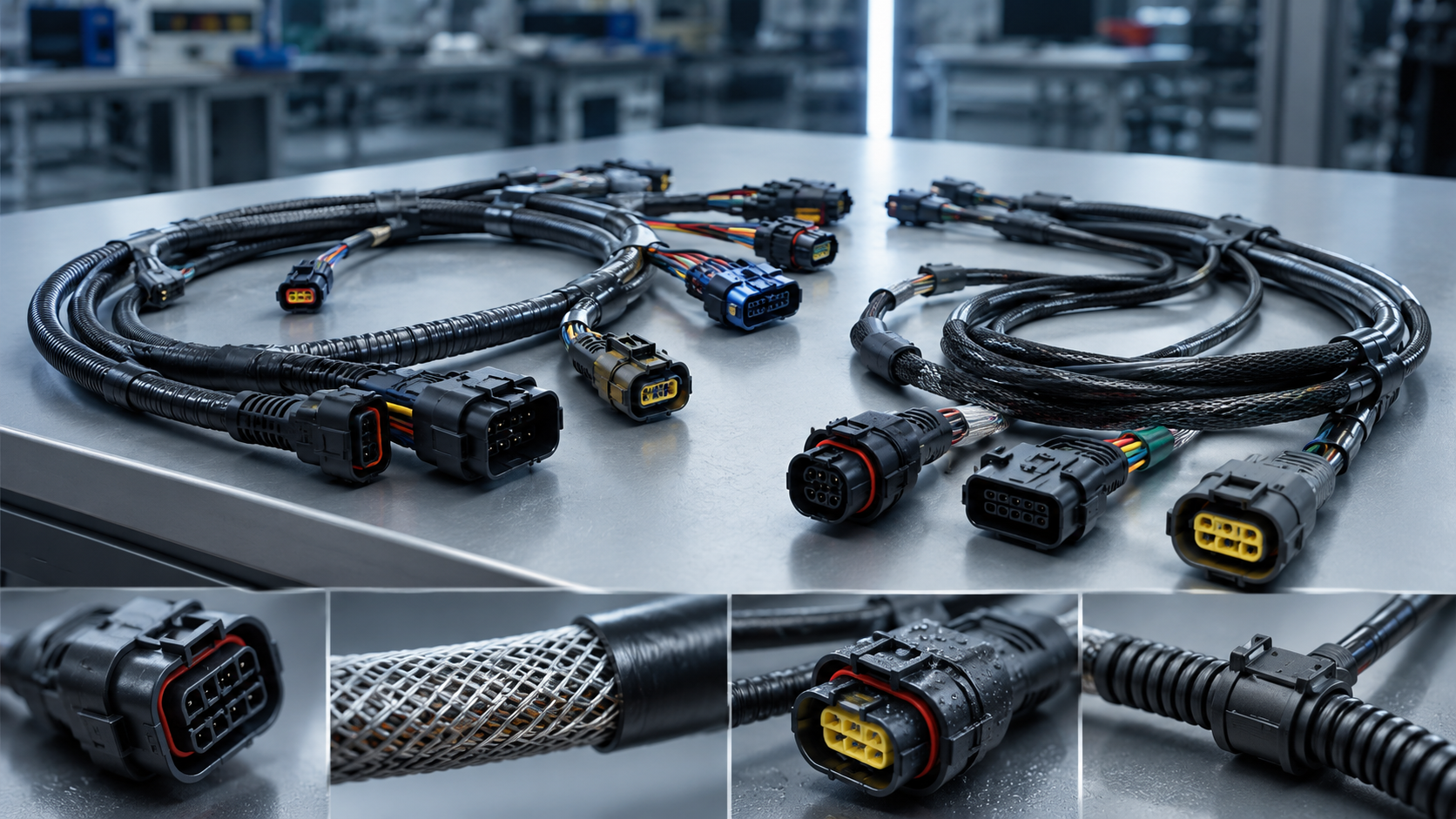
Table of Contents
1. Introduction to Motorcycle Wiring Harness Working Conditions
2. Vibration-Resistant Design: Core Foundation of Harness Durability
3. Waterproof Design Solutions for Outdoor and Riding Scenarios
4. Steel Wire Reinforcement Structural Optimization Technology
5. Sealed Connectors and Sheath Material Selection Standards
6. Industry Reliability Performance Data Comparison
7. Comprehensive Methods to Improve Motorcycle Harness Reliability
8. Conclusion
9. Professional Industry FAQ
1. Introduction to Motorcycle Wiring Harness Working Conditions
Motorcycle wiring harness is the central nervous system of all vehicle electrical systems. It controls ignition, lighting, sensing and power transmission functions.
Different from automobile wiring harnesses, motorcycle harnesses face harsher working environments. Long-term high-frequency vibration is unavoidable during riding.
Outdoor rain, road water splash and humid air also bring continuous erosion risks. It easily cause wire aging and connection failure.
Therefore, targeted vibration-resistant design and waterproof design are essential to guarantee motorcycle harness reliability in complex road conditions.
2. Vibration-Resistant Design: Core Foundation of Harness Durability
2.1 Hazards of Long-Term Vibration on Harnesses
Motorcycle engines and tires generate continuous vibration during operation. The vibration frequency changes with riding speed.
Unoptimized harness structure will suffer from internal wire breakage and terminal loosening after long-term vibration.
Many intermittent electrical faults on motorcycles are caused by ignored anti-vibration structural protection.
2.2 Key Vibration-Resistant Design Measures
Professional vibration-resistant design focus on fixed point distribution and buffer protection.
Reasonable spacing of harness fixing buckles reduces local tension concentration during vibration.
Matching flexible buffer gaskets can offset most high-frequency vibration impact, protecting internal copper wires and terminal connections.
3. Waterproof Design Solutions for Outdoor and Riding Scenarios
3.1 Core Waterproof Pain Points of Motorcycle Harnesses
Road splashing, rainy riding and car washing easily penetrate harness gaps. Water invasion leads to short circuit and rusted terminals.
Traditional ordinary harnesses only have basic surface insulation, no targeted waterproof structure design.
3.2 Systematic Waterproof Design Strategy
High-reliability waterproof design adopts full-link protection, covering wires, joints and connectors.
Integral sealing treatment is carried out on harness branch points to prevent water accumulation and penetration.
Cooperating with high-performance waterproof accessories, the whole harness can adapt to all-weather outdoor working conditions.
4. Steel Wire Reinforcement Structural Optimization Technology
Steel wire reinforcement is a key enhanced process for heavy-load and long-distance motorcycle wiring harnesses.
Ordinary harness outer layers are easy to deform and crack under frequent extrusion and vibration.
After steel wire reinforcement treatment, the harness obtains strong radial tensile and compression resistance.
This technology effectively avoids harness breakage caused by excessive bending and external pulling force.
It greatly improves the overall structural stability of motorcycle wiring harness in extreme working conditions.
5. Sealed Connectors and Sheath Material Selection Standards
5.1 Application Advantages of Sealed Connectors
Connector failure is the highest failure rate part of motorcycle electrical systems.
Sealed connectors adopt integrated waterproof and dustproof structure. It blocks humid air and fine dust from entering the contact area.
It maintains stable conductive performance under vibration and humid environment, reducing virtual connection faults.
5.2 High-Quality Sheath Material Matching
Sheath material determines the anti-aging, wear-resistant and temperature-resistant performance of the harness.
Premium sheath materials have strong toughness, not easy to harden and crack in low temperature or high temperature environment.
Good sheath protection can isolate external friction and chemical corrosion, extending harness service life significantly.
6. Industry Reliability Performance Data Comparison
The following table shows the performance differences between ordinary motorcycle harnesses and optimized high-reliability harnesses. All data is sourced from SAE International 2025 motorcycle electrical component reliability test report.
Harness Design Scheme | Vibration Cycle Failure Rate | Water Invasion Failure Rate | Average Service Life | Low-Temperature Crack Resistance |
Ordinary Harness (No Reinforcement + Common Sheath + Ordinary Connectors) | 12.7% | 15.3% | 2.3 years | Poor |
Vibration & Waterproof Optimization + Standard Sheath Material | 4.2% | 3.8% | 3.6 years | Medium |
Full Optimization: Steel Wire Reinforcement + Sealed Connectors + Premium Sheath Material | 0.9% | 1.1% | 5.8 years | Excellent |
Test data fully proves that full-process optimized design can greatly reduce harness failure rate.
Steel wire reinforcement, sealed connectors and high-grade sheath materials are the three core guarantees for long-term harness reliability.
7. Comprehensive Methods to Improve Motorcycle Harness Reliability
Improving motorcycle harness reliability needs systematic design, not partial modification.
First, adopt professional vibration-resistant design to optimize fixing structure and buffer protection.
Second, match steel wire reinforcement technology for key stress and bending sections.
Third, replace ordinary joints with fully sealed connectors to eliminate water and dust hidden dangers.
Fourth, select high weather resistance sheath materials to adapt to complex temperature and environment changes.
8. Conclusion
Motorcycle wiring harness reliability directly determines vehicle electrical system stability and driving safety.
Scientific vibration-resistant design and waterproof design solve the two biggest environmental interference problems.
Steel wire reinforcement, high-performance sealed connectors and premium sheath materials further upgrade the overall protection level.
This complete set of design solutions has become the mainstream standard for high-quality motorcycle wiring harness manufacturing.
9. Professional Industry FAQ
Q1: Why motorcycle harnesses need special vibration-resistant design? A1: Motorcycles produce continuous high-frequency vibration during riding. Ordinary harnesses are prone to wire breakage and terminal loosening after long-term vibration. Professional vibration-resistant design effectively avoids intermittent electrical faults and improves driving stability.
Q2: What is the core function of steel wire reinforcement for harnesses? A2: Steel wire reinforcement enhances the tensile and compression resistance of motorcycle wiring harnesses. It prevents structural deformation and internal wire damage caused by bending, extrusion and pulling during long-term use.
Q3: How do sealed connectors improve waterproof performance? A3: Sealed connectors adopt integrated waterproof and dustproof structure, which can effectively block rainwater and humid air from entering the connection contact surface. It avoids short circuit, oxidation and virtual connection faults caused by water invasion.
Q4: How does sheath material affect harness reliability? A4: High-quality sheath materials have excellent wear resistance, weather resistance and low-temperature toughness. They can resist external friction, ultraviolet aging and temperature change damage, maintaining long-term stable protection for internal wires.